
What if travelling from Kenya to Ghana were as straightforward as travelling between two states of the United States? What if an entrepreneur in Nairobi could establish a business in Accra without navigating a separate immigration system? What if an African researcher could accept an invitation to present at a university elsewhere on the continent without first having to determine whether a visa, electronic travel authorisation or additional entry documentation was required?
These are not simply questions about convenience. They raise a much larger question about the political organisation of Africa, the history of its borders and what African unity is supposed to mean in practice.
Why do we have these borders in the first place? And, having inherited a continent divided into dozens of sovereign states, must we continue organising African mobility in precisely the same way?
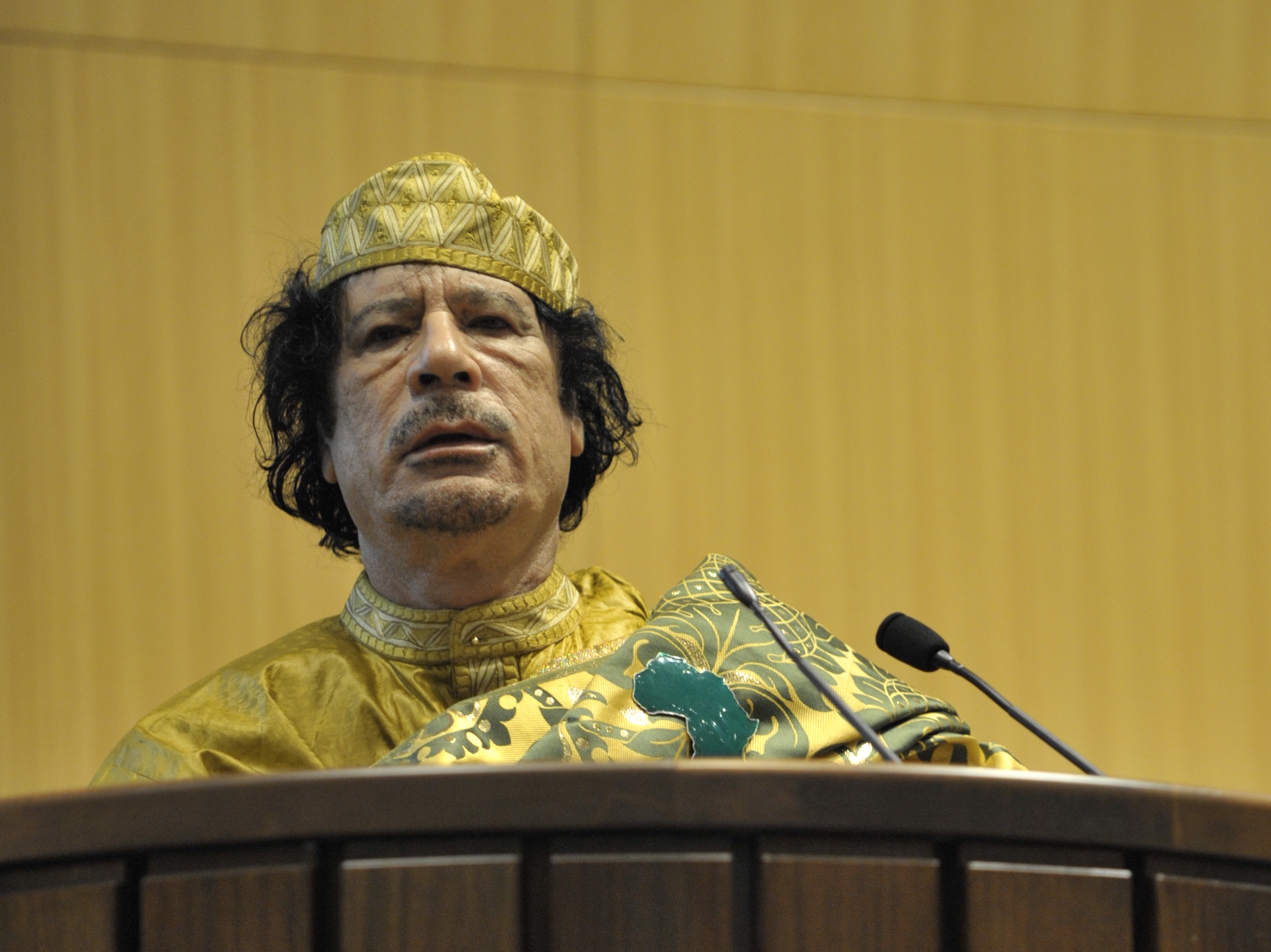
The idea of a United States of Africa is not new. It has appeared repeatedly in Pan-African political thought, from the arguments of Ghana's first president, Kwame Nkrumah, to the continental ambitions of Libya's Muammar Gaddafi.
Yet Africa remains a continent where the movement of people between neighbouring countries can be complicated by different visa regimes, immigration rules and administrative requirements.
Perhaps the question is not simply whether Africa should become one country. Perhaps we should first ask why a continent that has spent decades discussing integration still finds it so difficult to make movement between its countries genuinely accessible.
How did Africa acquire its borders?
To understand the contemporary African state system, we must return to the colonial period, when European powers expanded their territorial claims across the continent.
The Berlin Conference of 1884–1885 is frequently presented as the moment when European powers drew the borders of modern Africa. The conference was unquestionably important to the wider process of colonial expansion and the establishment of rules through which European powers asserted their claims to African territory.
However, the history is more complicated than the familiar image of European officials sitting around a table and drawing the entire continent into existence.
Research published in the American Political Science Review by Jack Paine, Xiaoyan Qiu and Joan Ricart-Huguet challenges the assumption that African borders were all arbitrarily drawn at Berlin. Their research shows that most modern African borders took shape over subsequent decades, through a process influenced by European competition, geographical features, existing political boundaries and interactions with African rulers.
This distinction matters. The colonial partition was not a single event that produced every modern boundary at once. It was a prolonged process of territorial acquisition, negotiation, conquest and administrative consolidation.
Nevertheless, the resulting colonial territories frequently divided communities with longstanding social, linguistic, economic and political connections. Other colonial boundaries brought different communities under a single administration, contributing to the complex political geography inherited by independent African states.
For example, Ewe communities live across what are now Ghana and Togo, while Somali communities have historical connections spanning several modern states in the Horn of Africa.
Communities, kingdoms, trading networks and cultural identities existed long before many of today's international boundaries. The colonial territorial system did not create Africa's human geography; it reorganised the political space in which that geography existed.
When independence arrived, African leaders faced a difficult question: should the new states attempt to redraw these boundaries, or should they preserve the territorial arrangements they had inherited?
The decision would shape the continent for generations.
Why did independence not produce one African country?
Political independence presented African leaders with both an opportunity and a dilemma.
They had fought to end colonial rule and establish African self-government. Yet the new governments inherited separate administrative territories, institutions, economic arrangements and relationships with the international system.
One possible path was to consolidate these territories into a larger political federation. Another was to preserve national sovereignty while pursuing cooperation between independent states.
In the early years of independence, these options became the subject of serious disagreements among African leaders.
In 1963, the Organisation of African Unity (OAU), the predecessor of the African Union, was established in Addis Ababa. Its creation reflected a shared commitment to African solidarity, the eradication of colonialism and the defence of African independence.
But the question of how much political authority should be transferred from individual states to continental institutions remained unresolved.
At the organisation's founding, Kwame Nkrumah of Ghana argued forcefully for a more integrated political future. His vision went beyond occasional diplomatic cooperation. He advocated a Union Government of African States, accompanied by common economic and industrial planning and coordinated continental development.
For Nkrumah, political fragmentation risked undermining the very independence African countries had achieved. Separate states could remain vulnerable to external economic pressure, divided markets and competition over resources, even after formal colonial rule had ended.
His argument was that continental unity could give African countries greater collective power to determine their economic and political futures.
Other leaders were less willing to transfer authority to a central continental government. They favoured cooperation while retaining control over their own governments, territories and political institutions.
The eventual OAU framework reflected this tension: it championed African unity while affirming the sovereignty and territorial integrity of member states.
In July 1964, African heads of state adopted the Cairo Resolution, pledging to respect the borders existing when their countries achieved independence.
This decision was not simply an endorsement of colonialism. It was also a pragmatic response to the dangers of reopening territorial questions across a continent where boundary disputes could become sources of interstate conflict.
Redrawing borders might appear to offer historical justice in some circumstances, but it could also create new disputes over territory, citizenship, resources and competing claims to land.
The choice to preserve inherited boundaries helped establish a foundation for relations between independent African states. It also made the territorial framework of the postcolonial continent much more durable.
The question of unity, however, was never settled.
The dream of a United States of Africa: From Nkrumah to Gaddafi
The idea of a politically united Africa survived the disagreements of the independence era.
Muammar Gaddafi became one of its most prominent later advocates. During his leadership of Libya and his 2009 chairmanship of the African Union, he championed a more centralised African political structure, often described as the United States of Africa.
His proposals included a continental government and stronger common institutions, alongside ambitions for greater economic and political coordination.
These ideas echoed parts of Nkrumah's earlier vision, although the two men operated in different historical and political circumstances.
The comparison with the United States is compelling because it offers a familiar example of multiple constituent units existing within a single sovereign political system. American states retain their own governments and responsibilities, but they also operate within a federal constitutional order.
Could an equivalent arrangement work in Africa?
It is an attractive question, particularly when viewed through the lens of economic integration and international bargaining power. A more politically integrated continent could potentially coordinate infrastructure, negotiate collectively on international issues and develop larger, interconnected markets.
But the American model cannot simply be transplanted onto Africa.
The United States has its own history of colonialism, territorial expansion, slavery, civil war, federalism and constitutional development. Africa's countries have different political histories, legal systems, administrative capacities, languages, economic structures and security concerns. Their citizens also hold diverse understandings of national identity and political belonging.
Creating a continental federation would require difficult agreements about representation, taxation, resource distribution, political accountability, security and the powers of a central government.
Who would lead it? How would smaller countries be protected against domination by larger ones? How would the federation balance national autonomy with continental decision-making? And how would citizens hold a powerful continental government accountable?
These are not minor technical questions. They go to the heart of whether political unity would make African governance more effective and democratic.
The resistance to a United States of Africa therefore cannot be explained solely as a failure of political imagination. It also reflects real disagreements about sovereignty, power and the institutional arrangements through which unity would operate.
Nevertheless, rejecting an immediate continental federation does not mean abandoning the question of how Africa might become more integrated.
There is another possibility: to begin with the practical barriers that prevent African countries from functioning as an interconnected region, even while they remain separate sovereign states.
Why should an African need a visa to travel within Africa?
This is where the discussion becomes particularly interesting from an immigration and migration-governance perspective.
Imagine a Kenyan planning to attend a conference in another African country. Before travelling, they may need to establish the destination country's entry requirements, determine whether a visa is necessary, complete an application or electronic authorisation, pay applicable fees and wait for a decision.
Depending on the destination and the traveller's circumstances, additional documentation may be required.
For some routes, this process is straightforward. For others, it introduces uncertainty, cost and administrative delay before a journey has even begun.
The scale of this problem becomes clearer when we look at the data.
The 2025 Africa Visa Openness Index, produced through the African Development Bank and African Union Commission partnership, found that only 28.2% of measured intra-African country-to-country travel scenarios were visa-free. In 51.1%, travellers were required to obtain a visa or comparable authorisation before departure. Visa-on-arrival arrangements accounted for another 20.4%.
These percentages describe travel scenarios between African countries, rather than the proportion of individual journeys taken by all African travellers.
The figures reveal an important contradiction. Although African integration has become a long-standing continental policy objective, visa restrictions continue to shape how easily Africans can move between many of their own countries.
This affects more than holidaymakers.
For business owners, mobility barriers can complicate market entry, partnerships and regional expansion. For researchers and academics, they can introduce uncertainty into conference attendance, collaborative projects and university exchanges. For families, traders, students and workers, the consequences can be more immediate and personal.
In each case, the ability to cross a border influences the opportunities available to a person on the other side of it.
A continental market is not fully integrated simply because governments sign a trade agreement. Trade depends on transport, logistics, predictable rules and people who can move to build relationships, provide services, exchange knowledge and establish businesses.
The same is true of research and education. A researcher cannot meaningfully participate in continental academic networks if travelling to present their findings becomes prohibitively difficult or uncertain.
The visa question is therefore not separate from the political question of African unity. It is one of the places where that unity can be assessed in practice.
Africa has already promised to make movement easier
The African Union has not ignored this challenge.
In January 2018, it adopted the Protocol to the Treaty Establishing the African Economic Community Relating to Free Movement of Persons, Right of Residence and Right of Establishment.
The protocol sets out a framework for progressively facilitating the movement of African citizens, including their ability to reside and establish themselves in other member states. It forms part of the wider ambition to deepen continental integration.
Yet adopting a continental agreement and implementing it across dozens of national immigration systems are two different things.
The African Union's published treaty-status list, dated August 2023, recorded four ratifications of the free-movement protocol. That historical snapshot illustrates the gap between an agreed continental objective and the national legal commitments required to advance it. The latest treaty status should be checked when assessing progress at the time of publication.
The African Continental Free Trade Area (AfCFTA) similarly reflects the ambition to create a more integrated African market. Its objectives include facilitating trade in goods and services and deepening economic integration.
But the movement of goods, services, capital and people involves related but distinct policies. Progress in one area does not automatically remove restrictions in another.
This is why free movement deserves to be examined as a substantive political and governance issue rather than simply as an attractive slogan.
What does the right to move mean if it depends heavily on bilateral arrangements, national immigration rules and the changing policy decisions of individual governments?
What does an integrated African economy look like if the people expected to participate in it cannot move predictably between its constituent markets?
And what would it take to translate the African Union's stated ambitions into a mobility system that ordinary African citizens can actually use?
Do we really need to abolish the borders?
Perhaps the answer is not to abolish every African border tomorrow.
Borders serve functions that cannot be dismissed. Governments need systems for regulating entry and residence, protecting public safety, managing public services, addressing security concerns and establishing legal responsibility for people within their territories.
The question is how these responsibilities can be exercised without creating unnecessary obstacles to legitimate movement.
There is a difference between maintaining a territorial boundary and requiring extensive immigration formalities whenever someone crosses it. A country can retain its sovereignty while entering into agreements that allow eligible citizens of neighbouring states to travel, reside, work or establish businesses under clearly defined conditions.
Regional arrangements already offer ways to pursue greater integration without first creating a single continental government. The experience of African regional communities also provides important ground for examining different approaches to mobility.
Possible reforms include expanding visa-free arrangements, improving regional travel documentation, establishing predictable rules for residence and work, recognising professional qualifications and strengthening cooperation between immigration authorities.
Such measures would still require careful attention to security, labour rights, access to public services and the interests of local communities. Free movement should not mean the absence of governance. It should mean governance designed to make lawful movement more predictable, fair and accessible.
This approach also raises a question about whose interests current arrangements serve.
When an African traveller must obtain advance authorisation to visit another African country, which policy objectives are being pursued? Are the requirements proportionate to those objectives? Are they applied consistently? And what are the economic, social and intellectual costs of making movement more difficult than it needs to be?
These questions can be investigated through immigration law, policy analysis, travel requirements and the lived experiences of people navigating African borders.
They also help move the debate beyond a binary choice between the current system of sovereign states and a single continental government.
Africa could pursue much deeper practical integration without immediately resolving every disagreement about political federation.
The critical issue is whether governments are willing to make the movement of African people an integral part of their vision for the continent.
Rethinking African unity from the perspective of mobility
The United States of Africa remains a useful thought experiment because it forces us to question assumptions about the political map we have inherited.
But the question need not end with whether Africa should become one country.
It can also begin with the everyday experience of being African in a continent of separate states.
Why should a person's access to opportunities elsewhere in Africa depend so heavily on the passport they hold? Why do governments that commit to continental integration sometimes maintain restrictive entry requirements for citizens of other African countries? What political, economic and security calculations shape those decisions? And what kinds of regional arrangements might make movement easier without requiring countries to surrender all their sovereignty?
These are questions about borders, certainly. But they are also questions about power, citizenship, belonging and the meaning of independence in an interconnected world.
The history of African borders helps explain how the present system emerged. The decisions made by African leaders after independence help explain why those boundaries were preserved. Contemporary visa policies reveal how that system continues to shape mobility.
The relationship between these three developments deserves closer attention.
For me, this is where the question becomes especially important: not simply whether the United States of Africa is politically possible, but whether Africa's existing arrangements enable its people to benefit fully from the continent's collective social, economic and intellectual potential.
I am interested in exploring this question further through research on African mobility, immigration governance and the relationship between borders and political integration.
A future paper will examine these questions in greater depth, tracing the relationship between inherited territorial boundaries, post-independence sovereignty and the contemporary governance of movement across Africa.
For now, one question remains.
If African unity is a continental ambition, should the freedom of Africans to move within Africa be treated as a central measure of how far that ambition has been realised?
Perhaps the future of African integration depends not only on the borders our governments maintain, but also on the barriers they choose to remove.
Further reading
-
African Union. Protocol on Free Movement of Persons, Right of Residence and Right of Establishment.
-
African Union. The African Continental Free Trade Area.
-
African Union. Africa's Pan-Africanist Movement and the Road to Liberation.
-
Paine, J., Qiu, X., & Ricart-Huguet, J. Endogenous Colonial Borders: Precolonial States and Geography in the Partition of Africa. American Political Science Review.
-
African Development Bank and African Union Commission. Africa Visa Openness Index: 2025 Findings.