
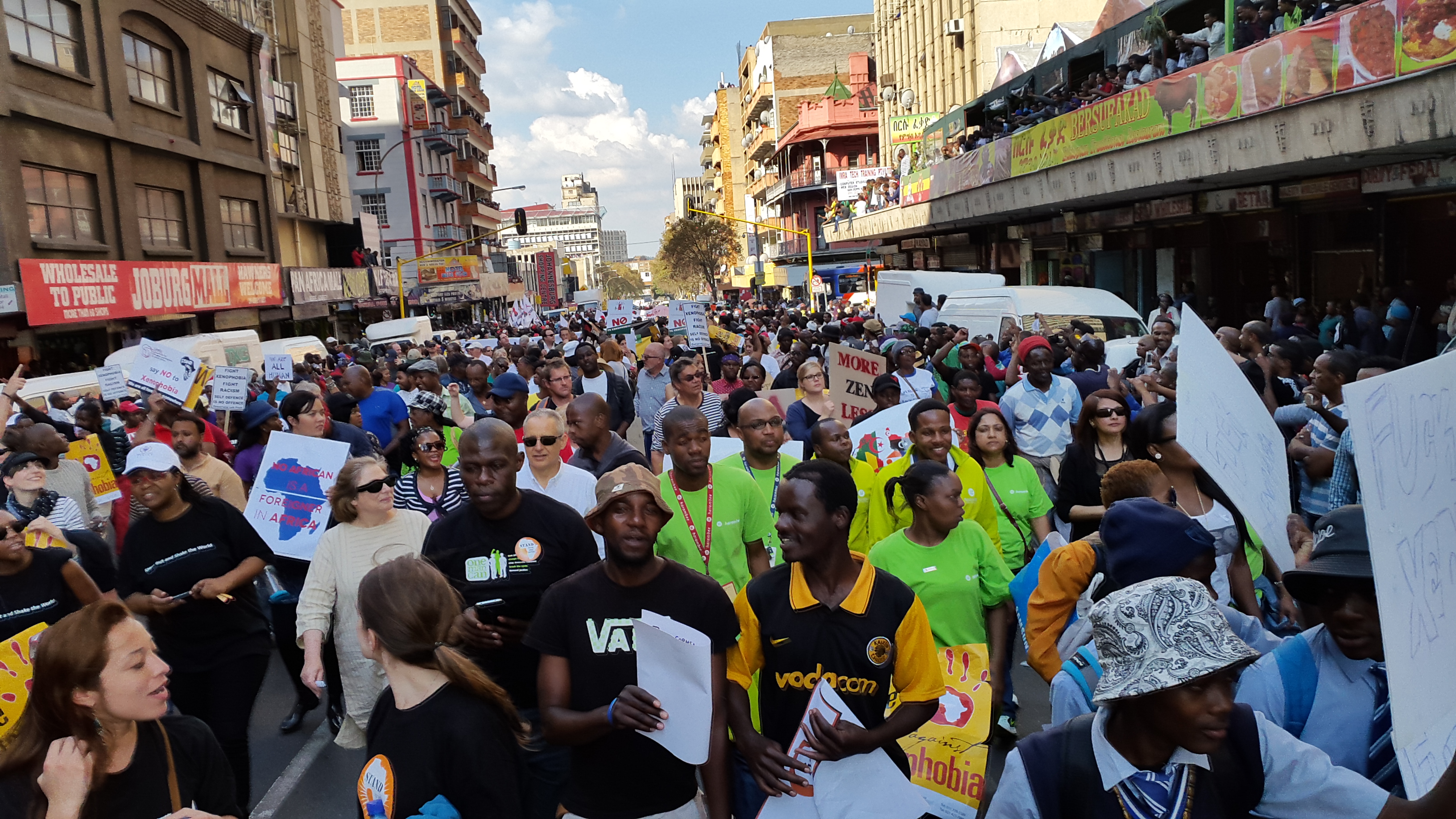
What does African unity mean if an African can be welcomed in the language of continental solidarity but rejected when they arrive in another African country?
It is a difficult question, particularly when we consider South Africa. The country's liberation from apartheid was not simply a domestic struggle. It was part of a wider African movement against colonialism, racial domination and minority rule. African governments, communities and liberation movements supported the struggle, often at considerable political and economic cost.
Yet decades after the end of apartheid, African migrants in South Africa continue to face hostility, discrimination and, at times, deadly violence.
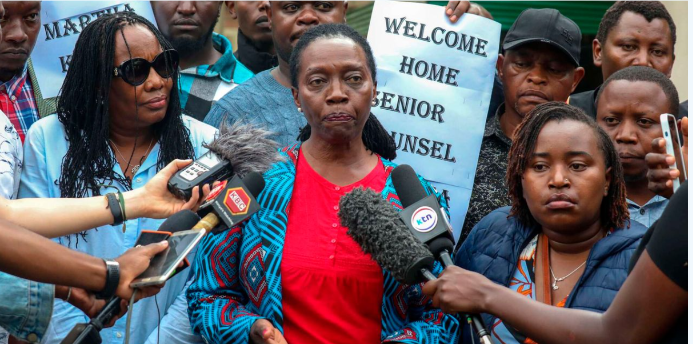
In October 2026, anti-migrant protests in Johannesburg's Soweto township and Durban turned violent. Reuters reported the burning of vehicles and the looting of foreign-owned shops. On October 9, South Africa's Department of Home Affairs withdrew a directive concerning the processing of asylum applications, following the unrest. The government maintained that a Constitutional Court ruling on access to asylum had been misrepresented and did not automatically grant undocumented migrants refugee status or permanent residence.
The events were the latest episode in a much longer history of anti-migrant hostility in the country.
But beyond the immediate news, there is a more unsettling question. Can we speak meaningfully about a shared African identity when belonging appears to end at the border of another African state?
This is not an argument that African countries should abandon immigration laws or that every African citizen should have an unrestricted right to settle anywhere on the continent. Governments have legitimate responsibilities concerning immigration, security, public services and the administration of asylum.
Rather, the question is whether these responsibilities can coexist with the idea of African solidarity. And why, in some circumstances, does the presence of another African become a source of resentment rather than an opportunity for cooperation?
South Africa and the history of African solidarity
To understand the contradiction, it is necessary to revisit the history of South Africa's liberation struggle.
Under apartheid, South Africa institutionalised racial segregation and political domination. The system denied the majority population equal political rights and entrenched racial inequalities in land ownership, employment, education and access to resources.
The struggle against apartheid became a continental concern. The Organisation of African Unity, established in 1963, made decolonisation a central priority and established mechanisms to support liberation movements across Africa. Countries elsewhere on the continent provided diplomatic assistance, resources and, in some cases, places of refuge for people forced into exile.
The struggle against apartheid was therefore supported by a wider understanding that racial domination in one African country was not merely that country's internal concern. It was an issue of African liberation and human dignity.
When apartheid ended and South Africa held its first democratic elections in 1994, the transition carried significance far beyond its borders. It represented a victory against a system that had become a symbol of racial injustice internationally.
South Africa subsequently became an influential participant in continental diplomacy and African integration.
This history makes contemporary xenophobia particularly troubling. The country whose liberation was supported by African solidarity is now a destination where other Africans can be portrayed as threats to national prosperity, security and social stability.
There is, however, an important distinction to make. The historical support Africans gave to the anti-apartheid struggle does not mean that South Africa owes every African unconditional entry or residence. National immigration systems remain a legitimate feature of statehood.
The deeper issue is what solidarity means after liberation. Is it remembered only as a historical achievement, or does it inform how African societies treat people from neighbouring countries today?
What do we mean when we say African unity?
Pan-Africanism has long promoted the idea that African peoples share political interests and have reasons to pursue collective progress. Yet shared continental identity does not necessarily eliminate national differences.
A person can identify strongly as African while believing that a country’s employment opportunities, public services and political resources should primarily benefit its citizens. These positions can coexist, even when they create tensions.
It is useful to distinguish three forms of belonging.
Continental belonging concerns the idea that Africans share histories, interests and a potential political future. It is expressed through Pan-Africanism, regional cooperation and the ambition to create a more integrated continent.
National belonging concerns membership in a particular political community. Citizenship determines voting rights and influences access to many state benefits, while immigration and residence laws establish the conditions under which non-citizens may enter, work or remain in a country.
Social and economic belonging concerns who is accepted as a neighbour, colleague, business owner or participant in everyday community life. It is possible to possess lawful immigration status and still be treated as an outsider. Conversely, someone may participate in a community economically and socially while lacking secure legal status.
These forms of belonging do not always align.
The South African case demonstrates how continental solidarity may coexist with restrictive ideas about national membership. The language of a shared African identity may become less persuasive when people perceive competition over employment, housing, public services or business opportunities.
This tension is not exclusive to South Africa. Across the world, countries celebrate cultural or regional ties while maintaining boundaries around citizenship, rights and access to resources. The question is how these boundaries are defined, how they are justified and when the protection of national interests becomes the exclusion or dehumanisation of outsiders.
Why are African migrants blamed for South Africa's problems?
Any meaningful examination of xenophobia must take the country's social and economic circumstances seriously without accepting every claim made about migration.
South Africa continues to struggle with deep inequality, unemployment and the enduring effects of apartheid. Access to housing and public services remains politically charged, and many communities have legitimate frustrations with the quality of governance and the opportunities available to them.
These conditions create fertile ground for political narratives that identify migrants as the cause of problems that are considerably more complicated.
Foreign nationals are frequently blamed for taking jobs, contributing to crime, competing for public services or operating businesses at the expense of citizens.
But these accusations must be assessed against evidence rather than repeated as established facts.
In a June 2026 analysis, the Institute for Security Studies examined anti-migrant narratives and argued that they misrepresent important aspects of South Africa's socioeconomic problems, immigration rules and asylum system. Human Rights Watch has similarly warned that vigilante movements have scapegoated foreign nationals for economic hardship, poor service delivery and crime.
This does not mean that migration has no economic effects, that every migrant complies with immigration law or that competition in particular labour markets never occurs. Immigration can create genuine policy challenges, and governments must be able to address them through effective regulation, labour protections and evidence-based planning.
The problem emerges when an entire category of people is blamed for structural difficulties without establishing a credible causal connection.
A foreign-owned shop becomes a symbol of economic exclusion. A migrant working in a low-wage occupation becomes evidence of jobs supposedly taken from citizens. The visible presence of foreigners can become an explanation for public frustrations that also reflect unemployment, unequal development, limited opportunities and failures of public administration.
This is politically powerful because it offers a simple target for complex problems.
It is also dangerous because the distinction between criticism of immigration policy and hostility towards immigrants can quickly disappear. Once migrants are portrayed as a collective threat, an individual’s nationality may matter more than their actual conduct, legal status or contribution to society.
The result can be a climate in which people are treated as guilty by association.
What does the evidence tell us about public attitudes?
The debate is not confined to the activities of a few violent groups. Public opinion research suggests that attitudes towards immigration in South Africa are also contested.
An Afrobarometer dispatch published in January 2026 reported that 56% of surveyed South Africans thought the government should limit cross-border movement in Southern Africa, while 40% supported the principle that people in the region should be able to move freely to trade or work.
The same report found that 69% viewed immigrants' economic impact on South Africa negatively. More than eight in ten respondents favoured reducing or eliminating the entry of foreign job seekers.
These findings demonstrate substantial public concern about immigration. They do not establish that every respondent supports violence, nor do they mean that every person who favours stricter immigration controls is xenophobic.
That distinction matters.
A democratic society can debate its immigration policy, set entry requirements and decide how to allocate public resources. But opposition to a policy is not the same as permission to intimidate, assault or dispossess the people affected by it.
The significance of the findings is that anti-immigration sentiment appears in a wider political environment in which particular movements can mobilise public frustrations into campaigns directed against foreign nationals.
Understanding that process requires more than condemning violence after it occurs. It requires examining the language used to describe migrants, the political incentives surrounding immigration enforcement, the credibility of public claims about migration and the ability of institutions to respond before tensions escalate.
The irony of belonging in post-apartheid South Africa
There is a deeper historical tension here.
South Africa's post-apartheid democratic order emerged from a struggle against a political system that determined people's rights and opportunities through racial classification. The democratic settlement placed equality, dignity and human rights at the centre of the country's constitutional framework.
Today, some migrants experience exclusion through a different distinction: nationality and perceived foreignness.
These are not identical forms of discrimination. Apartheid was a legally entrenched system of racial domination that structured virtually every aspect of public life. Contemporary anti-migrant hostility operates in a different political and legal context.
Nevertheless, the comparison raises an important question about the boundaries of equality.
Can a society commit itself to human dignity while allowing the idea of a foreigner to become sufficient justification for humiliation or violence? What happens when people who have lived in a country for years, established businesses, raised families and participated in local communities continue to be treated as perpetual outsiders?
Human Rights Watch has documented attacks against foreign nationals during the 2026 protests, including the reported assault of a Cameroonian shop owner who had lived in South Africa for nearly two decades. The organisation also highlighted the constitutional and international human rights obligations that require protection for people within the country's borders, regardless of citizenship.
This is an important reminder that belonging is not merely an abstract debate about identity. It affects personal security, the ability to earn a living, access to services and whether people can participate in society without fear.
The constitutional question is also distinct from the immigration question. A government may lawfully regulate who enters or remains in its territory, but those decisions do not give private individuals or vigilante groups the authority to inflict violence on people they consider foreign.
The rule of law requires immigration rules to be administered by lawful institutions rather than enforced through intimidation in streets, shops and neighbourhoods.
Is Pan-Africanism failing at the national border?
The African Union continues to promote a more integrated continent. The African Continental Free Trade Area seeks to expand economic integration, while the AU's free-movement framework expresses an ambition to make movement, residence and establishment easier for African citizens.
These initiatives depend on cooperation between sovereign states. They cannot succeed through declarations alone.
Regional integration requires governments to create workable policies, citizens to see the value of cooperation and institutions to address the concerns that arise when people move across borders.
Xenophobia exposes a problem that trade agreements and diplomatic statements cannot resolve on their own: people may support African cooperation in principle while resisting the arrival of Africans whom they perceive as competitors or outsiders.
This raises a question about the depth of continental integration. Is African unity primarily a project undertaken by governments, or is it also a social and political commitment that must be reflected in how African societies relate to one another?
It would be unreasonable to expect national identities to disappear. Nor should Pan-Africanism require governments to ignore legitimate questions concerning employment, immigration enforcement, public services or security.
But African integration loses some of its meaning when the movement of people is treated only as a threat. The economic and social connections between countries depend on traders, workers, students, entrepreneurs, families and researchers who cross national boundaries.
A continent cannot fully benefit from these connections if mobility remains a subject of persistent political hostility.
The challenge is therefore not to choose between national sovereignty and African solidarity as though one must eliminate the other. It is to establish how states can regulate migration while respecting the dignity of migrants and pursuing the wider benefits of continental cooperation.
What would a more humane approach look like?
Addressing South African xenophobia requires action at several levels.
First, governments must enforce the law consistently. Protests can be legitimate expressions of public concern, but assault, looting, threats and attacks against people or their property must be investigated and prosecuted. Immigration enforcement cannot be delegated to vigilante movements.
Second, public debate must be grounded in evidence. Claims about jobs, crime, public services and the economic effects of migration should be investigated rather than repeated for political advantage. Where migration creates pressures, governments should identify those pressures accurately and design policies that address their causes.
Third, immigration administration must be effective and predictable. Clear requirements, accessible asylum procedures, adequate staffing and consistent enforcement can help reduce uncertainty and improve public confidence. A state that cannot administer its immigration system effectively risks creating opportunities for both exploitation and political scapegoating.
Finally, African institutions and national governments must take the social dimensions of integration seriously. Making movement easier requires more than eliminating visa requirements. It requires cooperation on labour standards, documentation, residence rights, security and the responsibilities of both migrants and host communities.
None of these measures will eliminate every disagreement about immigration. They can, however, help distinguish legitimate policy debates from the persecution of people on the basis of where they come from.
Above all, African unity must mean more than the recognition that African countries share a continent. It must also involve a willingness to confront the ways in which national interests, political narratives and social anxieties can undermine that shared aspiration.
Can Africans belong to Africa but not to one another's countries?
Perhaps this is the central question raised by South African xenophobia.
The continent's history offers powerful examples of solidarity across national boundaries. African governments and citizens supported liberation struggles beyond their own territories because they understood that injustice elsewhere could be a matter of shared concern.
Yet solidarity is not automatically permanent. It must be translated into institutions, policies and relationships that remain meaningful when political circumstances change.
South Africa's experience demonstrates that a shared continental identity does not necessarily eliminate fear of outsiders or disagreements about who should have access to national opportunities. It also demonstrates how quickly economic anxiety and political mobilisation can put migrants at risk.
The answer cannot simply be that every African must be free to settle anywhere without conditions. That would avoid the difficult questions of governance, citizenship and public responsibility. Nor can the answer be that national sovereignty makes the treatment of foreigners a purely domestic matter, beyond wider questions of human rights and African cooperation.
The more important question is how African countries can preserve legitimate national institutions without allowing nationality to become a justification for dehumanisation.
For migration researchers, this is an opportunity to examine the relationship between continental identity, national citizenship and the politics of belonging. Why does African solidarity sometimes remain strong in diplomatic language but weaken in everyday encounters? How do political movements construct the migrant as an economic or social threat? And what kinds of institutions might help reconcile national immigration policy with a more meaningful commitment to African integration?
These are questions that extend beyond South Africa. They concern the future of mobility and cooperation across the continent.
At Wambui Research, I am interested in exploring how immigration governance shapes the movement of people and how borders influence ideas of identity, citizenship and belonging.
South African xenophobia offers an especially important case through which to examine these questions. A fuller research paper will explore the relationship between Pan-African solidarity, national belonging and the treatment of African migrants, asking why the idea of a shared African future does not always translate into acceptance across national boundaries.
For now, one question remains:
If Africans belong to a shared continent, what should that mean when they arrive in one another's countries?
Perhaps the future of African unity will depend not only on the agreements governments sign or the borders they regulate, but also on whether the people of the continent can recognise one another as more than strangers competing for a place to belong.
- List itemAfrobarometer: South Africans oppose immigration, express mixed attitudes toward foreigners (January 2026)
- Human Rights Watch: South Africa — New Waves of Xenophobic Attacks (May 2026)
- Reuters: South Africa withdraws asylum directive after anti-migrant violence (October 9, 2026)
- Institute for Security Studies: Anti-migrant myths that have been allowed to fester in South Africa (June 2026)
- African Union: Spotlight on 60 years of achievements — decolonisation and the struggle against apartheid