
What happens when crossing a border becomes more than a question of immigration permission? What happens when the people attempting to enter another country are lawyers, journalists and human rights activists travelling to show solidarity with a political figure facing prosecution?
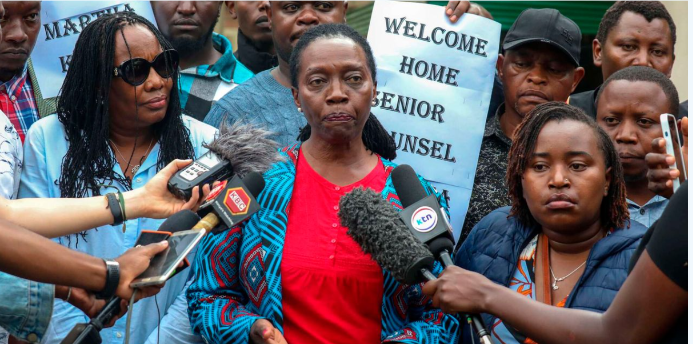
In May 2025, a series of incidents involving Kenyan and Ugandan activists in Tanzania raised precisely these questions. Kenyan lawyer and politician Martha Karua, Law Society of Kenya council member Gloria Kimani, and humanitarian and human rights activist Lynn Ngugi were detained at Dar es Salaam's Julius Nyerere International Airport, denied entry and deported to Kenya. They intended to attend and observe proceedings involving Tanzanian opposition leader and lawyer Tundu Lissu.
Days later, Kenyan activist Boniface Mwangi and Ugandan journalist and human rights activist Agather Atuhaire were detained in Tanzania in connection with their efforts to observe Lissu's case. After their release and return to their respective countries, both described serious abuse, including allegations of sexual violence by Tanzanian security personnel.
The two episodes were not identical. Karua and her colleagues were refused entry at the airport. Mwangi and Atuhaire entered Tanzania before being detained and subsequently returned to their home countries. The allegations of abuse have been contested matters requiring investigation and legal determination; they should not be confused with findings already established by a court.
Nevertheless, the incidents expose a common question about the politics of borders in East Africa.
The East African Community (EAC) presents regional integration as a project intended to deepen cooperation between its member states and strengthen the historical, economic, political and social relationships between their peoples. Yet when citizens cross borders to support those challenging political authority in a neighbouring state, regional solidarity can become a source of tension.
Can East Africans move freely between member states for trade, work and tourism while encountering obstacles when their purpose is political solidarity? And what does regional integration mean when governments retain the power to decide who may enter precisely when outside scrutiny becomes politically sensitive?
These questions extend beyond the individuals involved. They concern the relationship between state sovereignty, human rights and the future of regional cooperation.
The events that put East African solidarity to the test
On 18 May 2025, Martha Karua, Gloria Kimani and Lynn Ngugi arrived at Dar es Salaam's international airport ahead of proceedings involving Tundu Lissu, a prominent opposition politician and lawyer facing treason charges.
According to the Commonwealth Lawyers Association's statement of 23 May 2025, all three were detained, denied entry and deported to Kenya.
The incident did not end there. On 19 May, former Kenyan Chief Justice Willy Mutunga, activist Hanifa Adan and human rights defender Hussein Khalid were also detained at the airport and later deported. The Commonwealth Lawyers Association noted that former Chief Justice David Maraga had been allowed to enter Tanzania and attend Lissu's arraignment proceedings.
The different outcomes raised questions about how entry decisions were being made and whether immigration rules were being applied consistently to people travelling for the same broad purpose.
The distinction is important. A government has authority to regulate entry into its territory, and membership of a regional community does not mean that every traveller is automatically entitled to participate in every professional or political activity. However, when people engaged in a similar activity receive different treatment, the reasons for those decisions become relevant to questions of transparency, fairness and the rule of law.
Tanzania's government defended the refusal of entry as a sovereign decision. A Kenyan government spokesperson similarly stated that the decision was Tanzania's to make. This response highlighted the tension at the centre of the episode: the authority of an individual state to control its territory on one side, and the expectations created by regional integration on the other.
The events involving Boniface Mwangi took a more disturbing turn.
Reuters reported on 22 May 2025 that Tanzanian authorities had released Mwangi after detaining him in connection with his attempt to observe Lissu's court appearance. Tanzanian authorities had accused him of providing false information to gain entry into the country. At the time, Kenyan officials confirmed his return and said arrangements were being made for medical attention. The report also recorded allegations that he had been tortured, which Tanzanian immigration officials had not immediately addressed when approached for comment.
On 2 June, Mwangi and Atuhaire publicly described their experiences at a press conference in Nairobi. Both alleged serious abuse while in detention, including sexual violence. Their accounts subsequently became part of a wider regional debate over the treatment of human rights defenders.
The distinction between documented events and allegations matters. It is possible to examine the implications of the detentions, the deportations and the subsequent legal proceedings without presuming that every disputed allegation has already been proved.
The essential question remains: why did the attempt to observe a political trial become a controversy about immigration, security and the limits of regional solidarity?
When a border becomes a political boundary
Borders are often understood as territorial lines that separate one state from another. They establish where one government's legal jurisdiction ends and another's begins.
But borders also have political functions. They help governments regulate the movement of people, determine access to territory and exercise authority over activities taking place within their jurisdiction.
In ordinary circumstances, this authority may appear administrative. A traveller presents identification, satisfies entry requirements and proceeds into the country.
In politically sensitive circumstances, however, the same authority can acquire another dimension. Decisions concerning entry, detention and removal may determine whether journalists can report on an event, lawyers can participate in regional legal activities or human rights observers can document proceedings.
The border then becomes more than a line separating territories. It can become a mechanism through which political participation is facilitated, restricted or deterred.
This is not unique to East Africa. Governments across the world sometimes invoke immigration and national security powers when dealing with foreign activists, journalists or political critics. The resulting controversies often concern the extent to which states can regulate the presence of people whose activities may expose them to criticism or scrutiny.
The Tanzanian cases raise a related question within a region whose governments have committed themselves to closer integration.
When a Kenyan travels to Tanzania to attend proceedings involving a Tanzanian opposition leader, the traveller is crossing a national border. But the purpose of that journey is also connected to the wider relationship between civil society, legal institutions and democratic accountability.
The political significance of the journey does not disappear simply because the person undertaking it is a foreign national.
Nor does a political motive automatically confer an unconditional right to enter or remain in another state. The point is that where entry decisions affect civic activity and access to public proceedings, their justification and administration deserve careful scrutiny.
The border becomes politically significant when it determines not only who can enter a country, but also who can witness, report on or express solidarity with events taking place there.
What does East African integration actually guarantee?
The East African Community was established to promote cooperation between its member states across economic, social, political and cultural fields. Its founding Treaty describes the development of a Customs Union and a Common Market as stages towards deeper integration, ultimately including a political federation.
The Treaty also establishes principles that extend beyond economic cooperation. Article 6 identifies democracy, the rule of law, accountability, transparency and the protection of human and peoples' rights among the Community's fundamental principles. Article 7 emphasises free movement and the importance of good governance and respect for human rights.
These commitments are significant because they establish regional integration as more than a project to facilitate trade.
The EAC's Common Market Protocol provides a more specific framework for movement. Article 7 guarantees the movement of citizens of partner states within the Community, including visa-free entry, movement within another member state, permission to stay and the ability to leave. It also requires partner states to protect citizens of other partner states while they are within their territories.
The Protocol recognises limitations on free movement for reasons of public policy, public security or public health, and provides for notification of other partner states when such limitations are imposed.
This framework does not abolish national immigration administration, nor does it automatically authorise a foreign lawyer to practise law in another country or give every visitor unrestricted access to all professional activities. Nevertheless, it creates expectations about how member states should treat one another's citizens.
The difficult question is how these commitments operate when movement is connected to politically sensitive activities.
The Protocol explicitly addresses the movement of persons, labour, services and capital. Political observation and human rights advocacy involve additional considerations, including freedom of expression, association, access to information and the openness of judicial proceedings.
These are overlapping but distinct questions. An individual may be entitled to benefit from regional free-movement arrangements without automatically having a right to perform every professional function in the host country. Similarly, a state may lawfully regulate entry while remaining bound by its wider obligations concerning fair administration, human rights and regional cooperation.
The challenge is to understand how these different legal responsibilities interact.
If an EAC citizen is denied entry while travelling to observe a public trial, what reasons support the decision? How is the decision assessed against regional commitments? What remedies are available if a traveller believes those commitments have been breached?
The events of May 2025 made these questions difficult to ignore.
Who has the right to observe a political trial?
The case involving Tundu Lissu brings another issue into focus: the significance of observing judicial proceedings.
Lissu is a prominent Tanzanian opposition figure whose prosecution attracted attention from legal professionals and human rights defenders outside Tanzania. The visitors from Kenya were not simply travelling as tourists. Their stated purpose was to attend and observe proceedings involving an opposition leader whose case had become a matter of regional concern.
Observing a trial can serve several functions. It can help legal professionals assess procedural developments, enable civil society organisations to report on judicial processes and provide independent attention to proceedings that may carry political consequences.
It is important to distinguish observation from representation. A foreign lawyer does not automatically acquire the right to practise in another jurisdiction merely by entering the country. Professional licensing rules, court procedures and national laws may establish conditions for appearing as counsel.
However, observing proceedings raises a different question from practising law. Where a hearing is public, the ability of observers to attend can contribute to confidence in the administration of justice.
Article 10 of the Universal Declaration of Human Rights recognises everyone's entitlement to a fair and public hearing by an independent and impartial tribunal in the determination of rights and obligations or a criminal charge. The principle of public proceedings matters because justice is not only about what happens in a courtroom; it is also about whether the process can be scrutinised.
The Commonwealth Lawyers Association consequently expressed concern that the deportations appeared to impede observers from attending the proceedings, raising questions about open justice and the regional commitments governing movement.
That concern does not, by itself, establish that the deportations were unlawful. Determining legality requires an examination of the decisions, their stated grounds, the applicable law and the evidence.
Yet it reveals why the incident carried significance beyond immigration administration. When observers are denied access to a sensitive proceeding, the decision can affect public understanding of the case and the ability of independent actors to assess the judicial process.
The question is not whether foreign observers should possess unlimited access. It is whether restrictions are justified, proportionate and administered consistently with applicable law.
Sovereignty versus solidarity
National sovereignty remains a foundational principle of international relations. States exercise authority within their territories and bear responsibility for security, public order and the administration of their laws.
For Tanzania, as for other states, the ability to determine who enters its territory is an important expression of sovereign authority.
But sovereignty does not exist in isolation from international commitments. States voluntarily join regional organisations, conclude treaties and accept obligations intended to govern their conduct towards other members.
The East African Community is built on this relationship between national authority and shared commitments.
Its founding Treaty identifies both sovereign equality and the protection of human rights as fundamental principles. It calls for peaceful coexistence, cooperation for mutual benefit and respect for the rule of law. These principles are intended to coexist rather than cancel one another out.
The difficulty emerges when governments interpret sovereignty in ways that appear to conflict with the objectives of the regional organisation to which they belong.
A government might regard the arrival of foreign activists as interference in domestic affairs. Those activists might understand their actions as a legitimate expression of solidarity with people facing political or legal challenges in a neighbouring state.
Both perspectives involve competing claims about the appropriate relationship between domestic political authority and wider regional responsibilities.
The question is how that disagreement should be managed.
If every expression of cross-border political solidarity can be framed as interference, the practical scope for regional civil society cooperation becomes uncertain. Yet if solidarity is treated as a blanket entitlement to enter another state and engage in any activity, legitimate questions concerning public order, professional rules and national law would be overlooked.
A more credible regional framework requires clear rules, transparent decisions and effective mechanisms for addressing disputes.
Sovereignty should not be assumed to excuse every action by a state. Equally, regional integration should not be interpreted as eliminating all national authority. The important question is whether sovereign powers are exercised consistently with the commitments governments have accepted.
The East African Community's credibility is at stake
Regional integration is often measured through trade volumes, infrastructure projects, shared markets and cross-border investment. These indicators are important, but they do not capture the entire experience of integration.
Regional communities also depend on legal institutions, civil society networks and the ability of people to cooperate across national boundaries.
When a lawyer from Kenya seeks to attend proceedings in Tanzania, or when an activist travels from Uganda to express solidarity with a political cause in a neighbouring country, the relationship between states is being experienced at the level of ordinary people and professional communities.
If economic movement is encouraged while political solidarity is treated as inherently suspicious, citizens may reasonably question how comprehensive the integration project really is.
This does not mean that every cross-border activity should be treated identically. Economic agreements, professional regulation, political advocacy and immigration law operate through different rules. But they all exist within a regional framework that promises cooperation and mutual benefit.
The credibility of the EAC depends partly on whether its commitments have practical meaning when they become politically inconvenient.
The incidents involving Karua, Mwangi, Atuhaire and other observers also raise questions about the role of regional institutions. If a citizen of one member state believes another member has violated obligations under the Community's Treaty, which institution can review the matter? How effectively can regional law be invoked? And what consequences follow when member states disagree over their obligations?
These questions are not merely theoretical.
On 18 July 2025, Agather Atuhaire and eight other applicants filed Reference No. 29 of 2025 before the East African Court of Justice. The case names the governments of Tanzania, Uganda and Kenya, as well as the Secretary General of the East African Community, as respondents. The applicants allege that the events involving Atuhaire and Mwangi—including alleged enforced disappearance, arbitrary detention, torture, sexual violence and unlawful expulsion—violated provisions of the EAC Treaty.
The Court's public case record identifies the filing and summarises the applicants' allegations. As of 10 October 2026, that public record does not list a first-instance judgment.
The existence of the case is significant because it places the dispute within the legal framework of regional accountability. It also illustrates the importance of distinguishing allegations from judicial findings: the Court record describes what the applicants allege, not a final determination of responsibility.
The case presents an opportunity to examine the practical reach of the EAC Treaty and the role of regional adjudication in disputes involving political freedom and state conduct.
Political solidarity does not stop at the border
The events of May 2025 also demonstrate that solidarity is not solely an issue of individual choice. It can become a regional political practice.
Lawyers, journalists, civil society organisations and human rights defenders often cooperate across national boundaries because political developments in one country may carry wider implications. Professional networks enable them to share information, attend proceedings, document events and call attention to potential abuses.
This cooperation can be especially significant where domestic institutions are under pressure or where concerns about judicial independence and political freedoms extend beyond a single country.
Cross-border solidarity does not require every observer to agree with every opposition movement or endorse every political position. It can be grounded in more basic principles: the importance of fair proceedings, the value of independent observation and the right to scrutinise the exercise of political power.
In this sense, solidarity is not necessarily an attempt to undermine national sovereignty. It can also be a means of supporting the legal and democratic principles that states themselves have pledged to uphold.
The question is whether regional institutions can make space for that form of civic cooperation without disregarding legitimate national laws or security responsibilities.
For East Africa, the answer matters beyond a single court case. The region's political and economic ties mean that developments in one state are often closely followed by citizens and organisations in neighbouring countries. Regional civil society networks are already part of how people interpret political events and seek accountability.
A regional community that facilitates trade but cannot adequately address disputes involving the treatment of its citizens risks leaving an important dimension of integration underdeveloped.
When borders become barriers to political solidarity
The experiences of Martha Karua and Boniface Mwangi reveal different ways in which state authority over borders can affect the movement of people engaged in political solidarity.
Karua, Gloria Kimani and Lynn Ngugi were denied entry and deported before they could attend the proceedings they intended to observe. Mwangi and Atuhaire travelled to Tanzania but were subsequently detained and returned to their home countries after events that led to serious allegations of abuse.
Their experiences should not be treated as identical, and the allegations arising from the detention of Mwangi and Atuhaire require careful legal assessment. But both episodes raise a shared question about the relationship between cross-border movement and politically sensitive civic activity.
What happens to regional integration when the movement of people is constrained in circumstances involving political scrutiny? How should the EAC reconcile its free-movement commitments with member states' security responsibilities? And what remedies can citizens and civic organisations pursue when they believe state actions conflict with regional obligations?
The answers require attention to immigration law, regional treaties, political context, institutional accountability and the experiences of the people affected.
For researchers interested in African mobility and international relations, this is a question about more than who can cross a border. It concerns the purposes for which movement is permitted, the authority exercised by states and the extent to which regional commitments shape national practice.
A border may separate two sovereign territories, but political developments rarely remain confined neatly within those boundaries. Neither does solidarity.
Through Wambui Research, I am interested in exploring how immigration governance and regional institutions shape the movement of people, particularly where borders intersect with identity, rights and political participation.
A forthcoming research paper will examine these questions through the experiences of cross-border activists and legal observers in East Africa, focusing on the relationship between sovereignty, regional integration and the governance of political solidarity.
For now, the central question is this:
Can East Africa build a meaningful regional community if its citizens can move across borders for economic opportunity but face uncertainty when they cross those same borders to support democratic accountability?
Perhaps the real test of regional integration is not simply how easily goods and people move in ordinary circumstances, but how consistently states respect their shared commitments when political pressure is at its greatest.
Further reading
Commonwealth Lawyers Association. Statement on the detention and deportation of observers of Tundu Lissu's trial (23 May 2025).
Reuters. Kenya says Tanzanian authorities have released activist Boniface Mwangi (22 May 2025).
East African Court of Justice. Reference No. 29 of 2025: Agather Atuhaire and eight others.
East African Court of Justice. Treaty for the Establishment of the East African Community.
East African Court of Justice. East African Community Common Market Protocol.